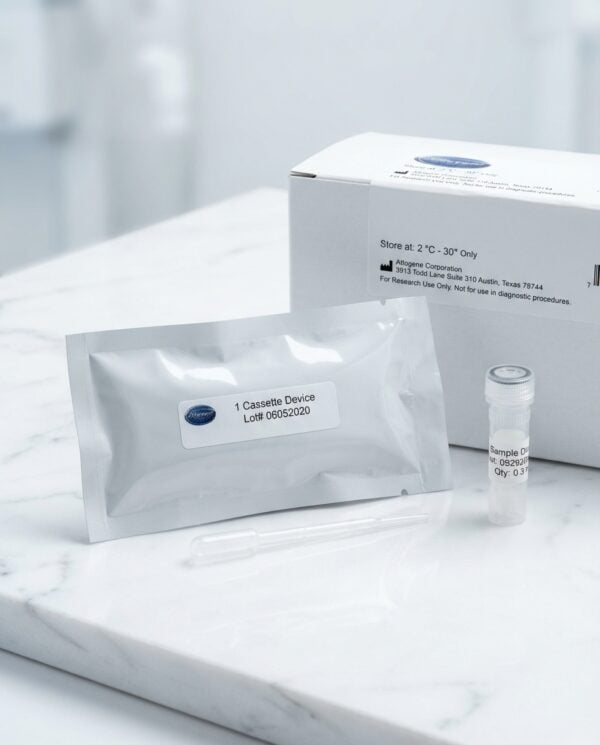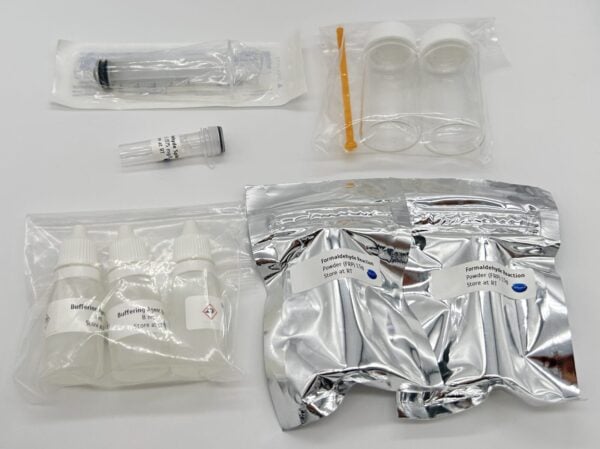

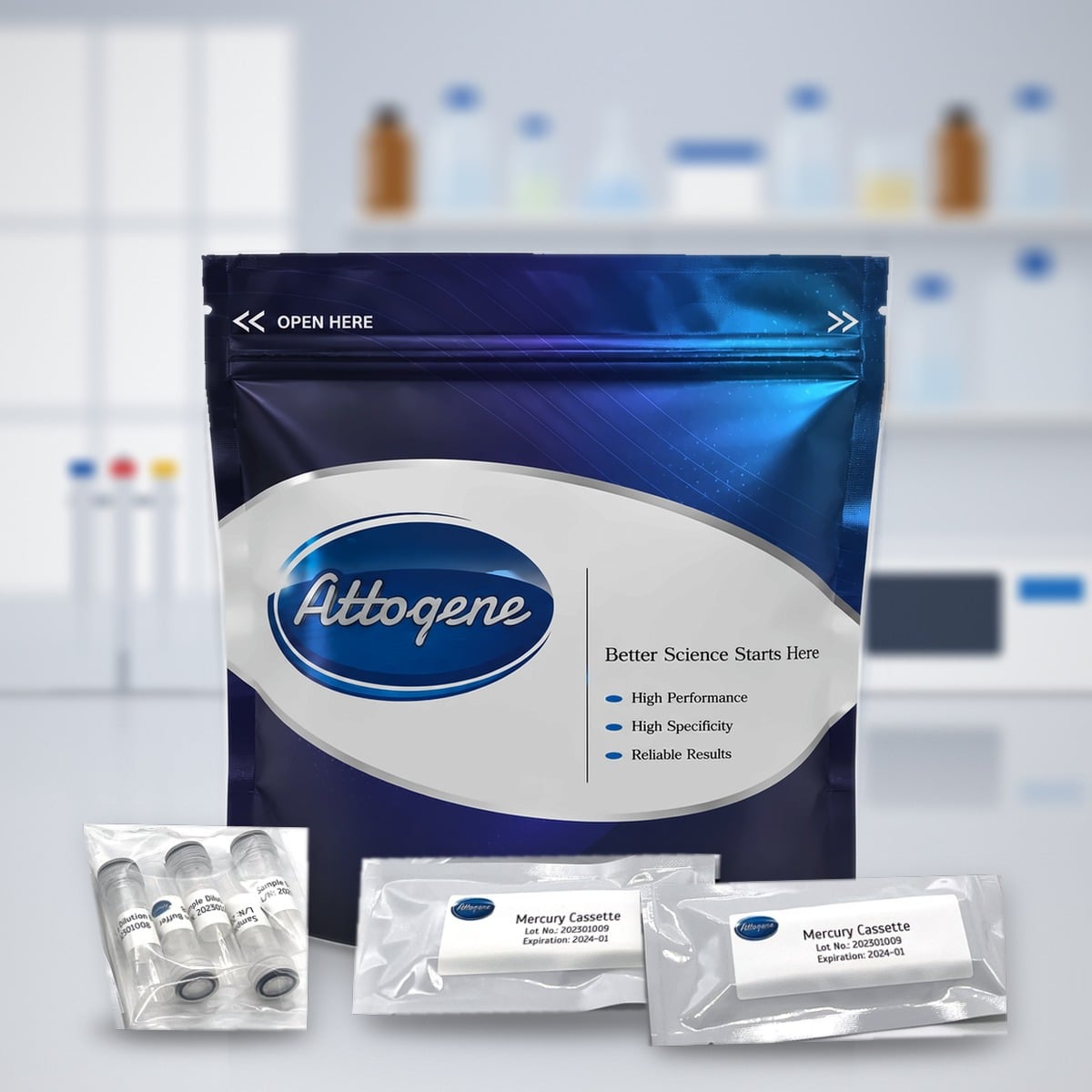
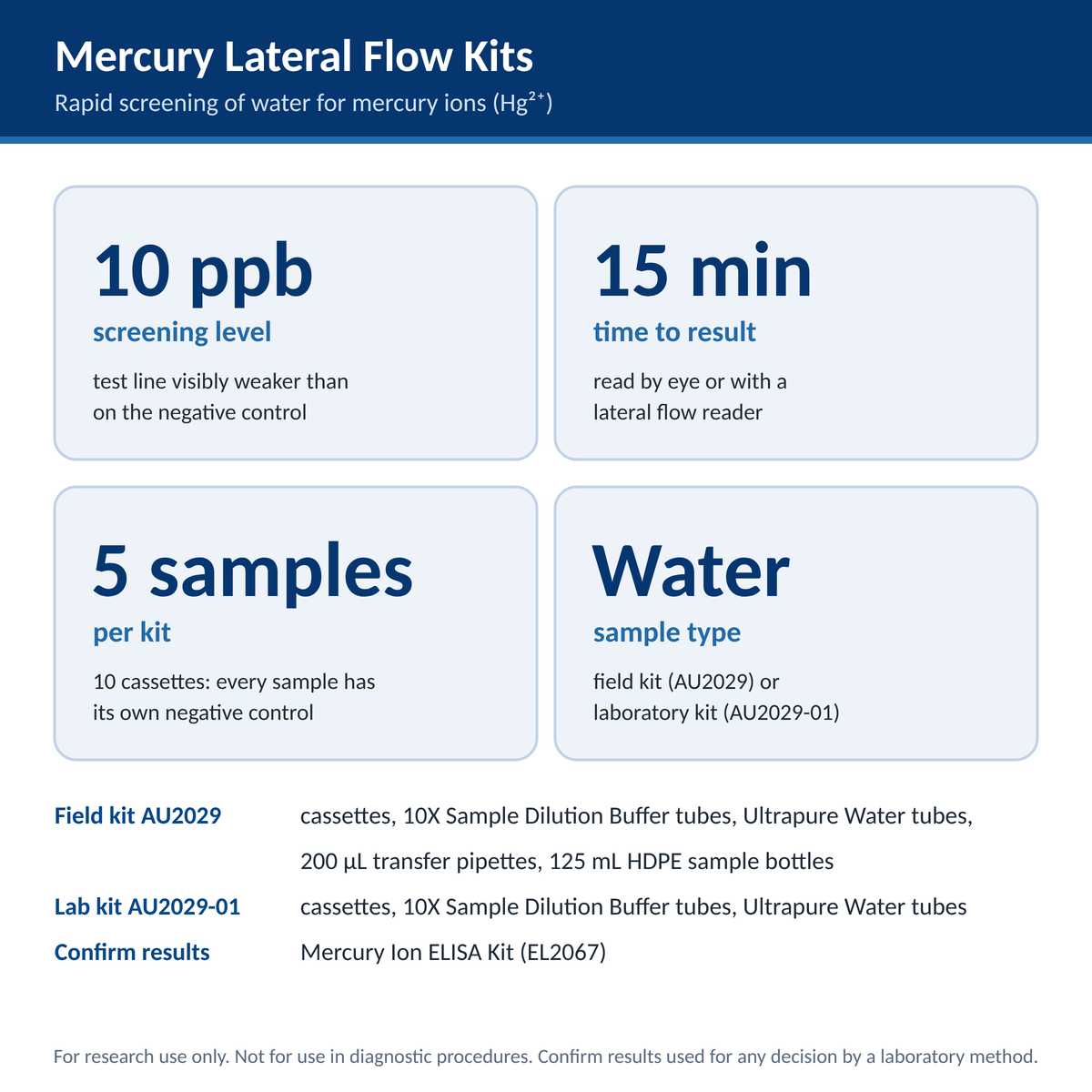


The Mercury Detection Kit (Rapid – Lab) is a mercury rapid test for laboratory screening of water for mercury ions (Hg2+) at 10 ppb (10 µg/L) and above. Each kit tests 5 samples with 10 single-use cassettes, one per sample and one per negative control, and results are read at 15 minutes by eye or with a lateral flow reader.
This lab version (catalog AU2029-01) contains the cassettes, buffer and negative-control water only. You pipette 200 µL of each sample with your own pipettor, which makes it a lower-cost option for labs screening samples in batches.
Key Features
- Screening level: mercury ions at 10 ppb and above; a very faint or absent test line indicates about 100 ppb or more.
- 15-minute read: each cassette is read 15 minutes after the liquid is added.
- Paired negative control: every sample is read against its own negative control cassette.
- Simple pipetting: 200 µL of sample into a pre-filled 10X buffer tube, mix, then 200 µL onto the cassette. No centrifuge needed.
- Reader compatible: calculate test-to-control (T/C) ratios with a lateral flow reader for numerical results.
- Flexible storage: all components at room temperature, or at 2 to 8 °C.
What’s in the Kit
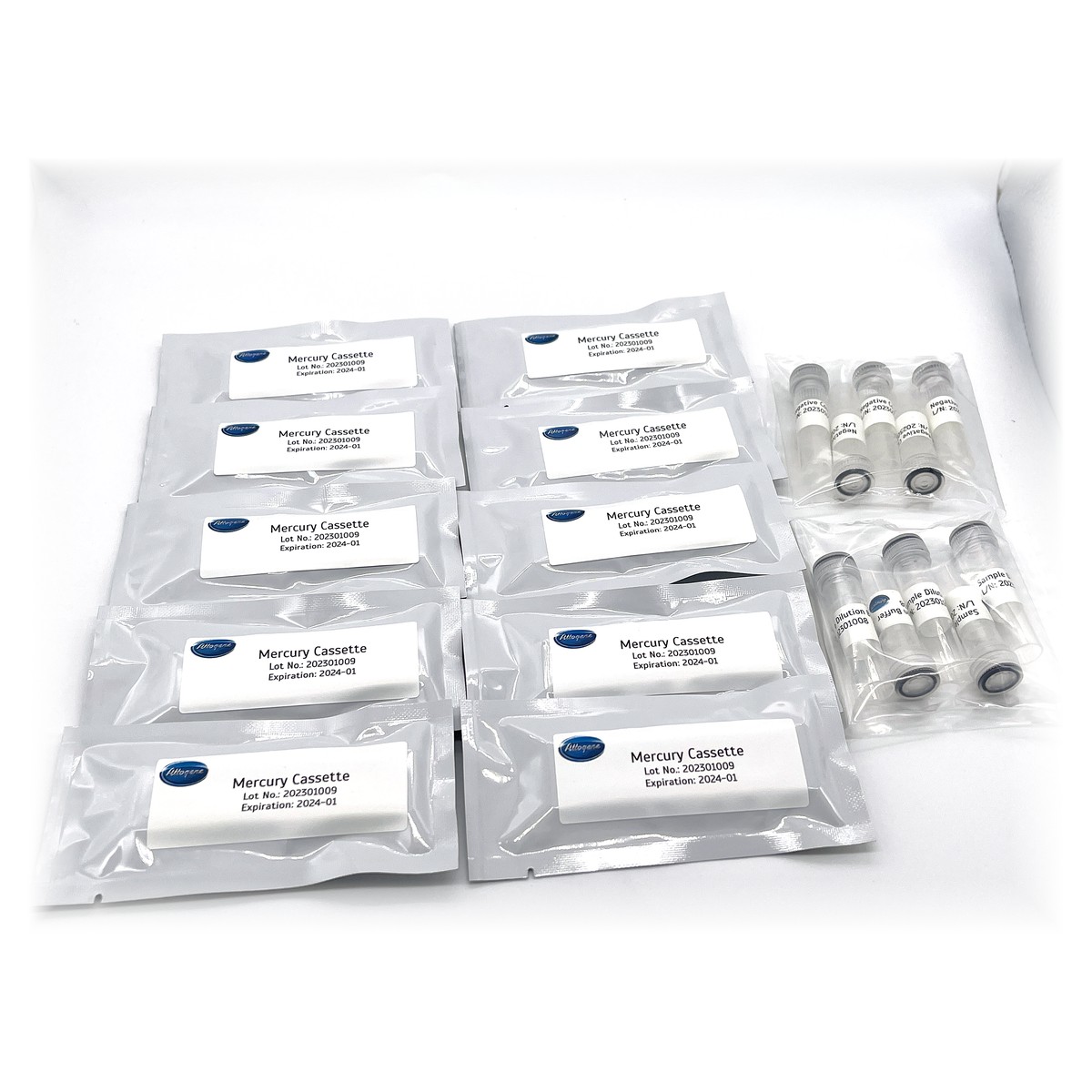
Each mercury rapid test kit includes:
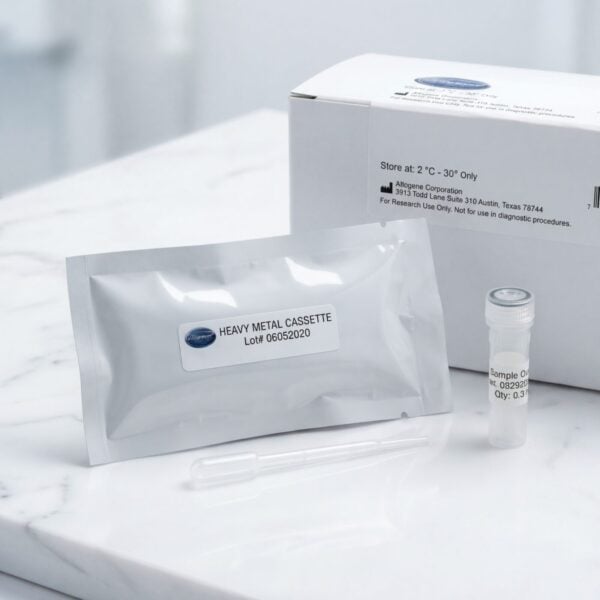
- 10 mercury cassettes, each in a foil pouch with desiccant
- 10 tubes of 10X Sample Dilution Buffer (22 µL per tube)
- 5 tubes of Ultrapure Water for the negative controls (200 µL per tube)
- Instruction manual
You will also need: a timer, disposable gloves, a permanent marker, a 20 to 200 µL pipettor with tips, and clean sample bottles. A mercury standard of known concentration is optional, as a positive control or to estimate concentration. Extra Sample Dilution Buffer is available in packs of 5 or 10, and this page also offers 5-test and 20-test sizes.
Who It’s For
This mercury rapid test is intended for technical users in environmental, research and contract testing labs who want a quick triage step before instrumental analysis. It assumes standard lab equipment and pipetting skills.
For testing at the sampling site without a pipettor, choose the Mercury Detection Kit (Rapid – Field Use), which adds sample bottles and fixed-volume pipettes. For quantitative results, use the Mercury Ion ELISA Kit.
How to Use the Mercury Rapid Test
Collect each sample in a clean bottle filled to the top and capped tightly. Test as soon as possible, ideally within a few hours, because mercury can be lost to plastic bottle walls and as vapor. If needed, store capped at 2 to 8 °C in the dark and test within 24 hours. Do not add acid or other preservatives. Let cloudy samples settle and take the clear top layer. Bring everything to room temperature before testing.
- Tap two buffer tubes on the bench so the buffer collects at the bottom. Lay two cassettes flat and label one NC and one with the sample name.
- Negative control: pipette 200 µL of Ultrapure Water into a buffer tube and mix 3 times. Add 200 µL of the mix to the sample port of the NC cassette and start the timer.
- Sample: with a new tip, pipette 200 µL of the water sample into a new buffer tube and mix 3 times.
- Add 200 µL of the mix to the sample port of the sample cassette and note the time.
- Keep both cassettes flat and still, then read them side by side at 15 minutes.
Download the Mercury Lateral Flow Kit Laboratory Use Manual (AU2029-01) for full instructions and troubleshooting.
How It Works and Reading Results
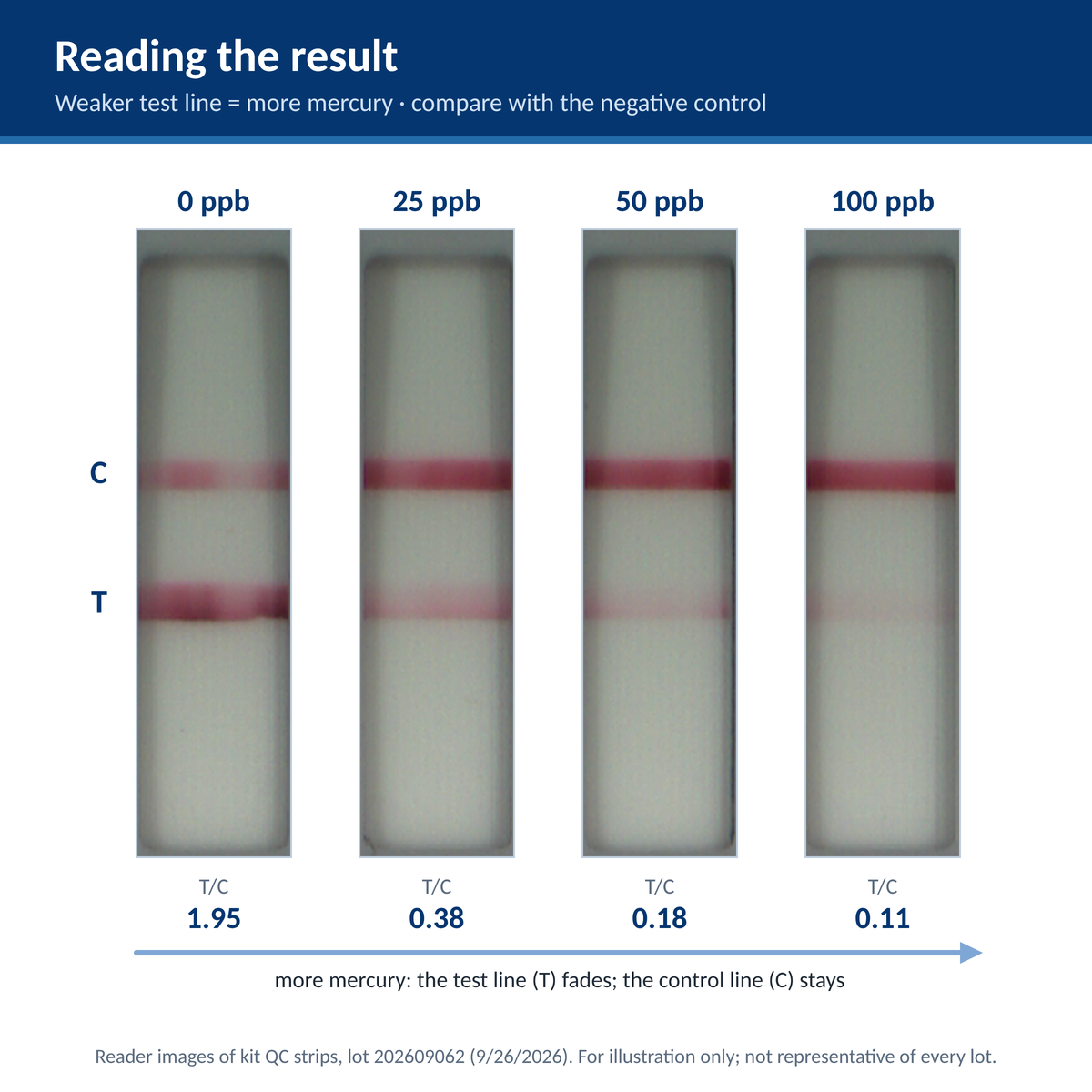
The test is a competitive immunoassay using 40 nm colloidal gold conjugated to a mouse monoclonal anti-mercury antibody, a mercury-BSA test line and a goat anti-mouse IgG control line. Mercury in the sample blocks the antibody, so a weaker test line means more mercury.
- Invalid: no control line on the sample or negative control cassette. Repeat with new cassettes.
- Negative: sample test line as dark as or darker than the negative control, below 10 ppb.
- Positive: sample test line visibly lighter than the negative control, 10 ppb or more.
- Strong positive: test line very faint or absent, about 100 ppb or more.
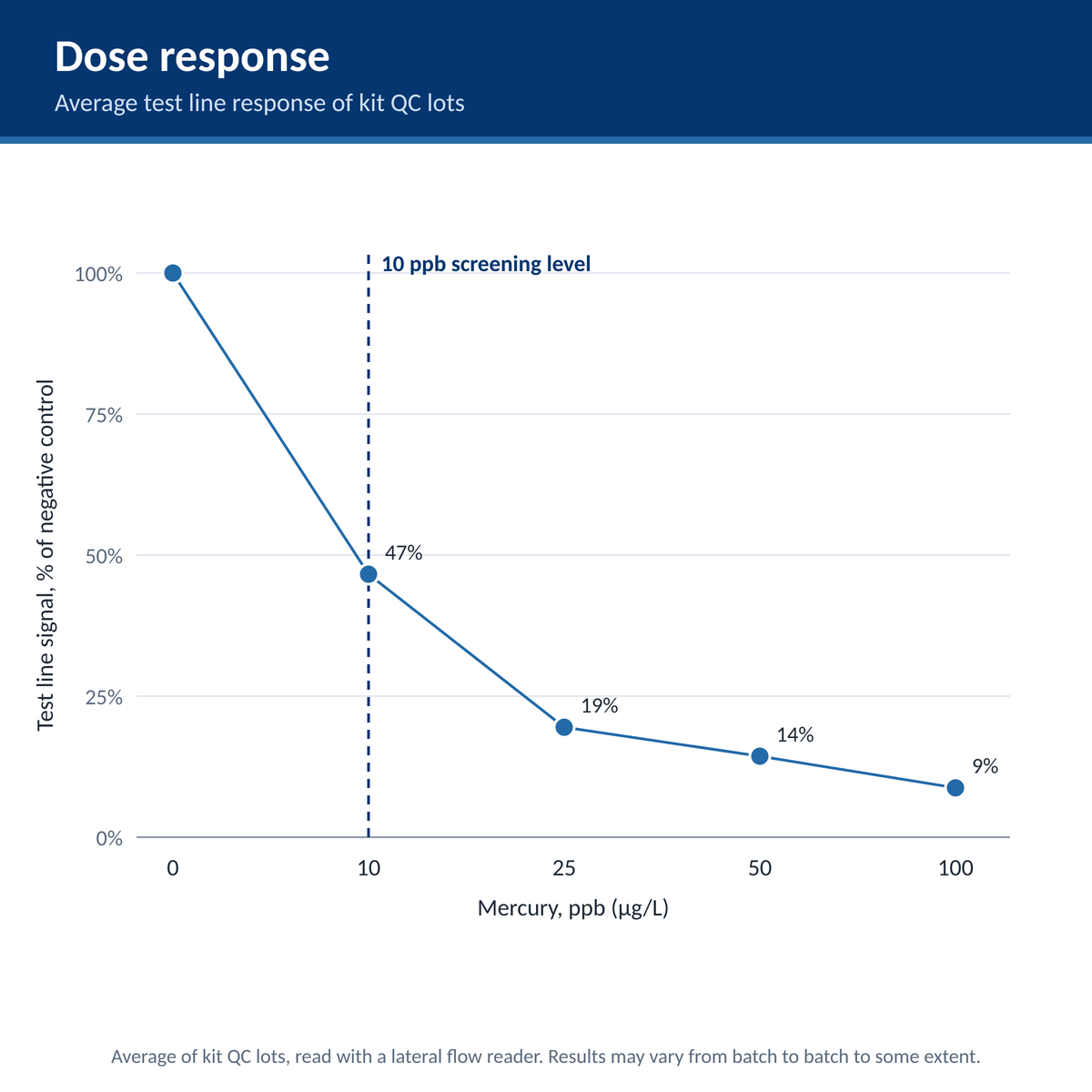
With a reader, a sample T/C at or below about half of the negative control T/C indicates 10 ppb or more. To estimate concentration, run mercury standards prepared in Ultrapure Water alongside the samples.
Frequently Asked Questions
What is the screening level of the mercury rapid test?
10 ppb mercury ions in water. Near this level the change in the test line is small, so read the sample and negative control side by side under the same light, or use a reader.
Can the lab kit test fish or food extracts?
No sample types other than water have been validated. Fish, food and other matrices have not been evaluated with this kit.
Does a negative result mean the water meets drinking-water limits?
No. The US EPA limit for inorganic mercury in drinking water is 2 ppb, below the 10 ppb screening level of the mercury rapid test.
How do I confirm positives?
Use a conventional method such as cold-vapor atomic absorption or ICP-MS, or quantify results with the Mercury Ion ELISA Kit.
Can I use my own deionized water as the negative control?
Use the supplied Ultrapure Water. Other water may contain traces of metals and make the negative control read incorrectly.
Lab kits are also available for lead and cadmium.
For research use only. Not for use in diagnostic procedures. Questions? Call 512-333-1330 or email sales@attogene.com.