

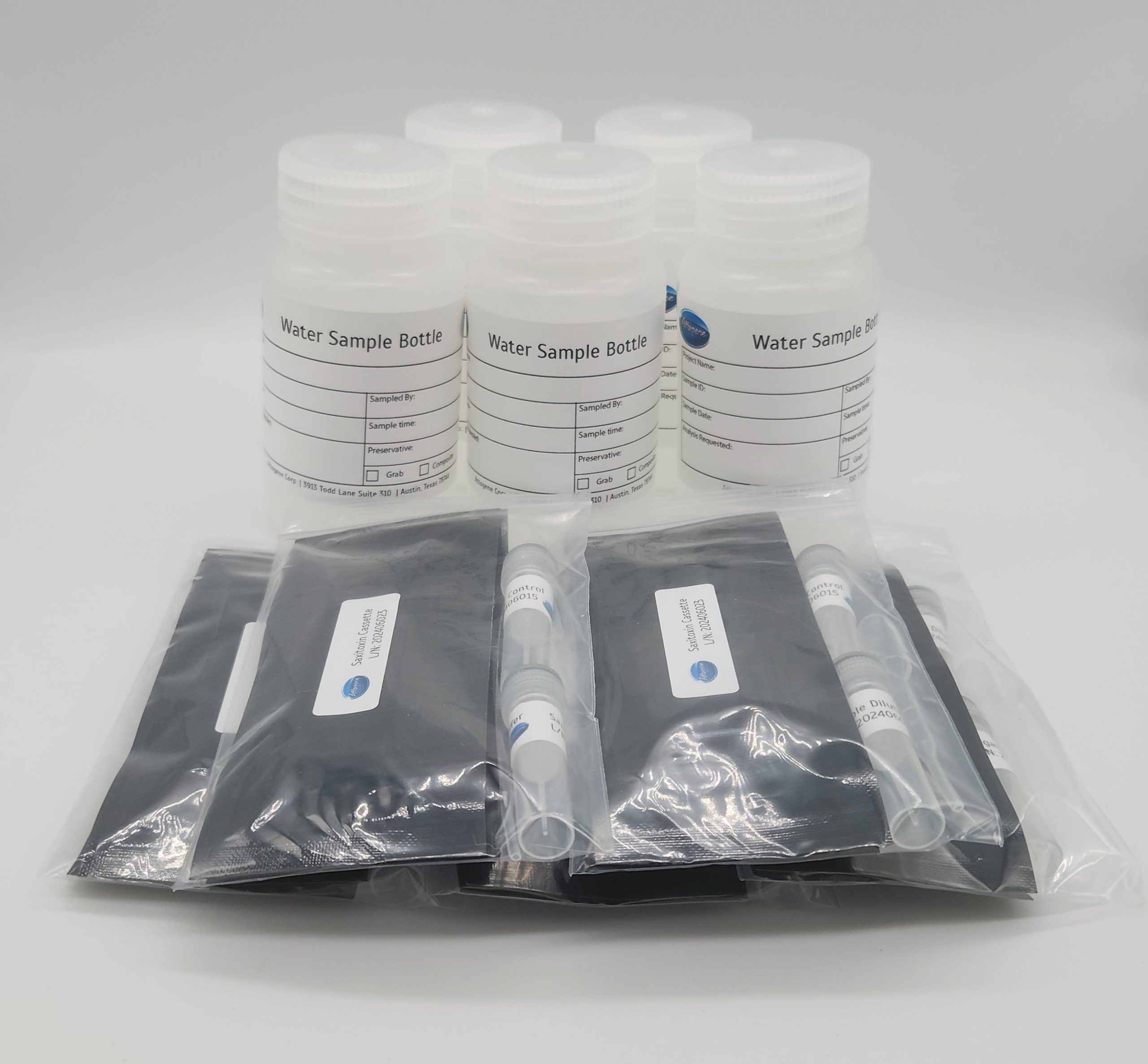
Saxitoxins (STXs) are naturally occurring alkaloids produced by some marine dinoflagellates and by strains of various species of freshwater cyanobacteria. Saxitoxin is one of the prevalent paralytic shellfish toxins (PSTs). It belongs to a family of potent neurotoxins with a molecular weight around 300 Da. Saxitoxin and its derivatives are alkaloids composed of a tetrahydropurine ring system with a highly polar guanidinium group. Due to their significant toxicity, saxitoxins are monitored in drinking-water sources and recreational waters during cyanobacterial harmful algal blooms (HABs). The World Health Organization (2020) guideline values for saxitoxins are 3 µg/L in drinking water and 30 µg/L in recreational water, and some US states use lower drinking-water advisories, such as Washington State’s provisional 0.2 µg/L. The kit’s screening level of 100 ppt (0.1 µg/L) is below all of these values. The kit responds most strongly to saxitoxin. In development testing, neosaxitoxin (neoSTX), GTX5 and GTX6 gave no consistent response; gonyautoxins GTX2/3, and to a lesser extent GTX1/4, gave a partial response in one of two experiments. Positive screens should be confirmed by ELISA, HPLC or another conventional method.


