

The Microcystin ELISA Kit (EL2024-02) is a high-sensitivity microcystin ELISA kit for quantitative analysis of microcystins and nodularins, with a 0.05 ppb detection limit. It is a competitive enzyme immunoassay in a 96-well plate format, with six MC-LR standards from 0 to 2 ppb and a total incubation time of 75 minutes. It handles a wide range of samples: water, wastewater, algal cultures, and solid samples such as fish.
Microcystins are liver toxins produced by cyanobacteria (blue-green algae) such as Microcystis aeruginosa during harmful algal blooms. Microcystin-LR is the most common of more than 50 known congeners, and these toxins can build up in fish and other aquatic food sources.
Key Features
- Detection limit: 0.05 ppb in water, wastewater and culture media.
- Standard curve: MC-LR standards at 0, 0.05, 0.1, 0.2, 0.4 and 2 ppb.
- Broad sample range: water, wastewater, liquid media, algal cultures and fish or other solids.
- Assay time: 30 + 30 + 15 minutes of incubation, 75 minutes in total.
- Accuracy and precision: 80 ± 10% accuracy in water, wastewater and culture media; CV less than 10%.
- Format: 96-well microtiter plate of 12 strips × 8 wells.
- Storage: 2–8 °C, protected from light; 12-month shelf life or until the expiration date.
What’s in the Kit
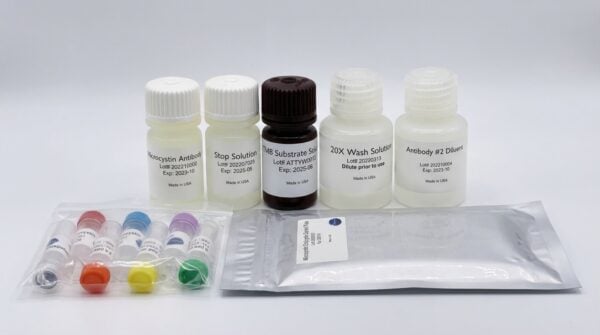
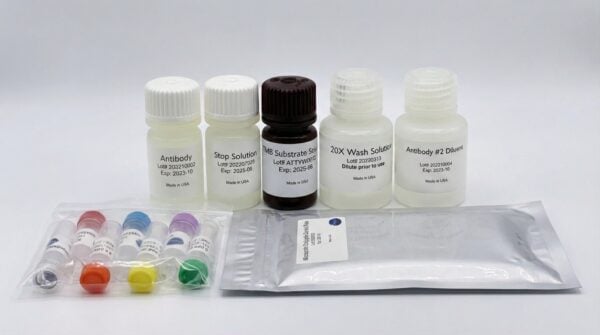
Each microcystin ELISA kit includes:
- Microtiter plate with 96 wells coated with microcystin
- Microcystin-LR standards, 6 vials × 0.8 mL: 0, 0.05, 0.1, 0.2, 0.4 and 2 ppb
- Microcystin Antibody #1, 11 mL
- 100X HRP-Conjugated Antibody #2, 0.25 mL, and Antibody #2 Diluent, 20 mL
- 20X Wash Solution, 28 mL
- TMB Substrate Solution, 12 mL
- Stop Solution, 14 mL
You will also need: an ELISA plate reader (450 nm/630 nm), deionized water, methanol, a vortex mixer, a timer, a wash bottle, 50 mL and 2 mL polystyrene centrifuge tubes, micropipettes covering 20–200 µL and 100–1000 µL, and a 300 µL multichannel pipette. A commercial blender is needed for solid samples.
Who It’s For
This kit is built for environmental and research laboratories, water and wastewater operators, aquaculture and fisheries researchers, and groups studying algal cultures who need the lowest detection limit or need to test matrices beyond drinking water, including fish tissue.
How to Use the Microcystin ELISA Kit
Bring all reagents and microwells to room temperature (20–25 °C) for at least 30 minutes, and run all standards and samples in duplicate.
- Prepare liquid samples: water, wastewater and liquid media should be particle-free and at neutral pH. If needed, centrifuge at 3000 g for 5 minutes or filter through a 1.2 µm syringe filter. Use 50 µL.
- Prepare solid samples: homogenize in a blender for at least 3 minutes, add 9.0 mL of 90% methanol/water to 1 g of homogenate and vortex 2 minutes, centrifuge at 3000 × g for 10 minutes, then dilute the supernatant with Antibody #2 Diluent. Use 50 µL.
- Prepare reagents: dilute the 20X Wash Solution 1:20 with deionized water, and freshly dilute the 100X HRP-Conjugated Antibody #2 1:100 in Antibody #2 Diluent.
- First incubation: add 50 µL of standard, positive control or sample, then 100 µL of Antibody #1. Shake 30 seconds, cover and incubate 30 minutes at room temperature.
- Wash: decant and rinse 3 times with 250 µL of 1X Wash Solution, then tap dry on absorbent paper.
- Second incubation: add 150 µL of 1X HRP-Conjugated Antibody #2, shake, cover and incubate 30 minutes. Wash again.
- Develop, stop and read: add 100 µL of TMB Substrate Solution and incubate 15 minutes at 25 °C, covered. Add 100 µL of Stop Solution and read at 450 nm within 5 minutes.
Full instructions are in the EL2024-02 kit manual (PDF).
How It Works and Reading Results
Microcystins in the sample compete with microcystin antigen on the plate for the microcystin antibody. More toxin means less bound antibody and a lighter blue color, so absorbance falls as concentration rises.
Express each mean absorbance as a percentage of the zero standard (B/B0 × 100) and plot it against standard concentration on a semi-logarithmic scale. Read sample concentrations from the curve and multiply by the dilution factor. If a sample’s absorbance is lower than the 2 ppb standard, dilute it to fit within the 0.05–2 ppb range and rerun.
Frequently Asked Questions
How sensitive is this microcystin ELISA kit?
The detection limit is 0.05 ppb in water, wastewater and culture media, the highest sensitivity among Attogene’s microcystin kits.
Can I test fish or other solid samples?
Yes. Solids are homogenized and extracted with 90% methanol, and the extract is diluted in Antibody #2 Diluent before testing.
Which microcystin ELISA kit do I need?
Choose this kit for the lowest detection limit and the widest range of samples. For total microcystins in drinking and ambient water, compatible for use with US EPA Method 546, choose the Congener-Independent Microcystin/Nodularins ELISA Kit (EL2024-05).
Is there a field screening option?
Yes. For quick screening on site, see the rapid recreational water test or the microcystin drinking water test.
What if the color is too light after 15 minutes?
The manual allows the TMB incubation to be extended up to 35 minutes if color is too light, but never beyond 40 minutes.
How should the kit be stored?
Store the microcystin ELISA kit at 2–8 °C away from light and do not freeze. Return unused strips to the foil pouch.
Not sure which test you need? Read our guide: Microcystin ELISA vs. Rapid Test Strips vs. qPCR: How to Choose a Microcystin Test.
More Microcystin Testing from Attogene
- Congener-Independent Microcystin/Nodularins ELISA Kit (EL2024-05): total microcystins in drinking and ambient water, compatible for use with US EPA Method 546
- ChroMate 4300 ELISA Plate Reader: read and quantify your microcystin ELISA plates
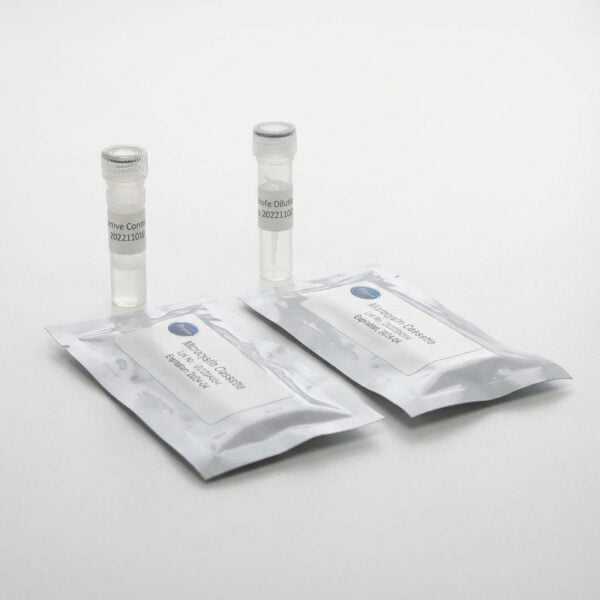
- Microcystin Detection Kit (Rapid – Recreational Water): 4 ppb field test, results in 10 minutes
- Microcystin Detection Kit (Rapid – Lab): 4 ppb bench screen for water and algal cultures
- Microcystin Detection Kit (Rapid – Finished Drinking Water): 0.1 ppb screen in 15 minutes
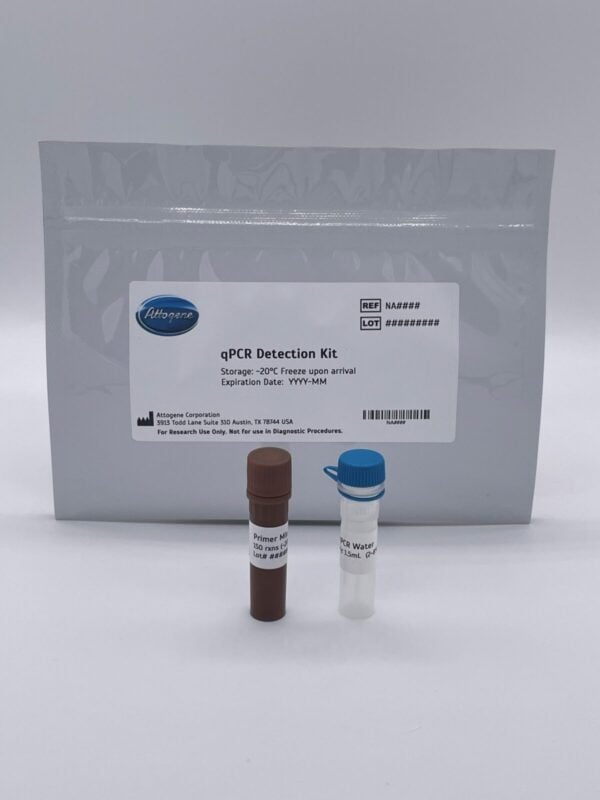
- Microcystin qPCR Detection Kit: detects the mcyE toxin gene in cyanobacteria
Resources: Quantifying microcystin in water with an ELISA plate reader · Testing spirulina for microcystin · Microcystin: the toxin produced by harmful algal blooms
For research use only. Not for use in diagnostic procedures. Questions? Call 512-333-1330 or email sales@attogene.com.